TEXAS IS #1 FOR HEARTWORMS IN THE COUNTRY!
Unfortunately, heartworms are one of the things we see a LOT of, here at Daingerfield Veterinary Hospital.
In a few short years, Texas has become the #1 state in the entire country, for the number of pets diagnosed with heartworms.
You can see on the map, the dark red coloring right on top of Northeast Texas. The darker the red color, the more cases of heartworm disease. And we have way too many cases of heartworm disease here.
Why do we have so many cases of heartworm disease? Several reasons, all working together.
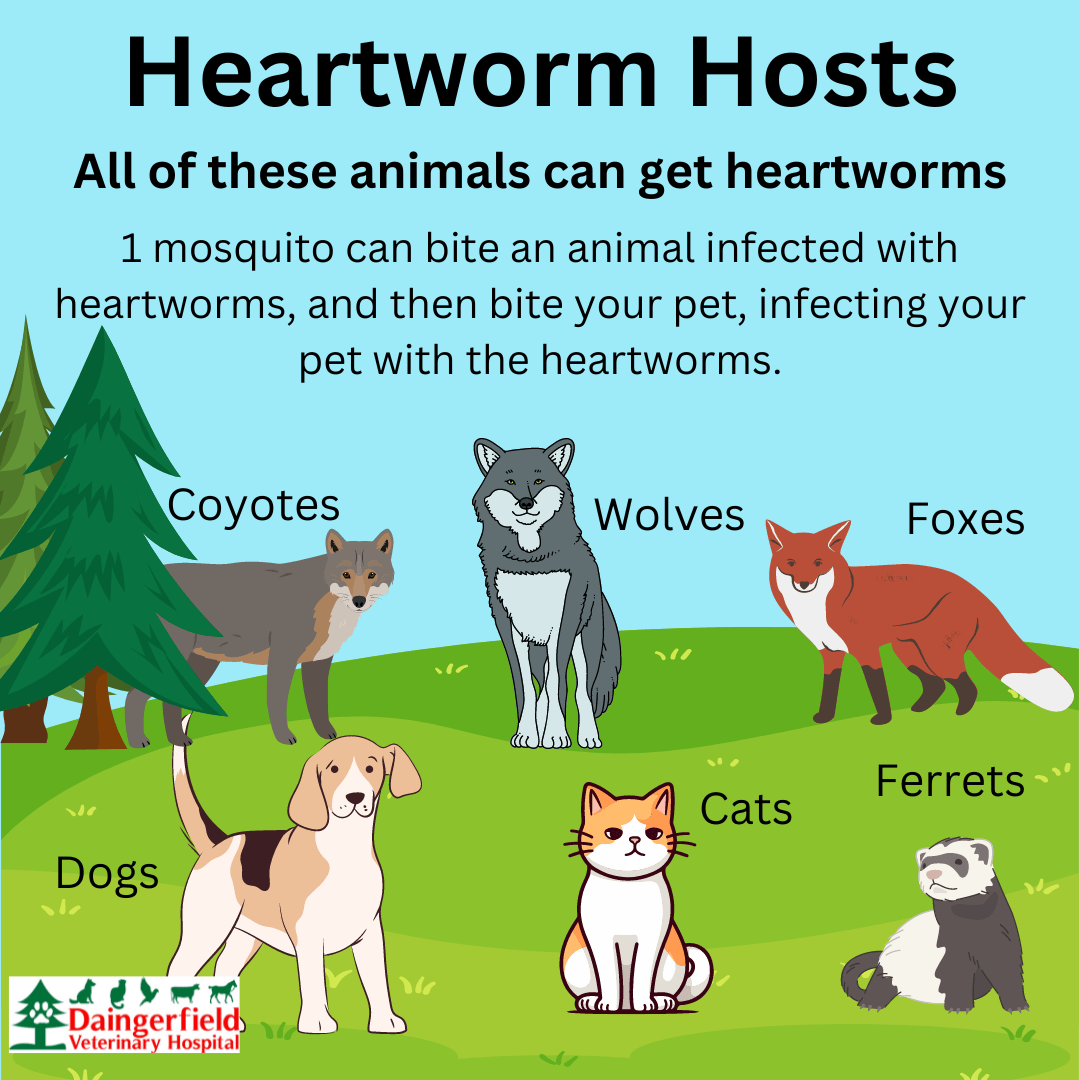
- We live in a forest area with a lot of wildlife. Wildlife can get heartworms and mosquitoes spread the heartworms to our pets.
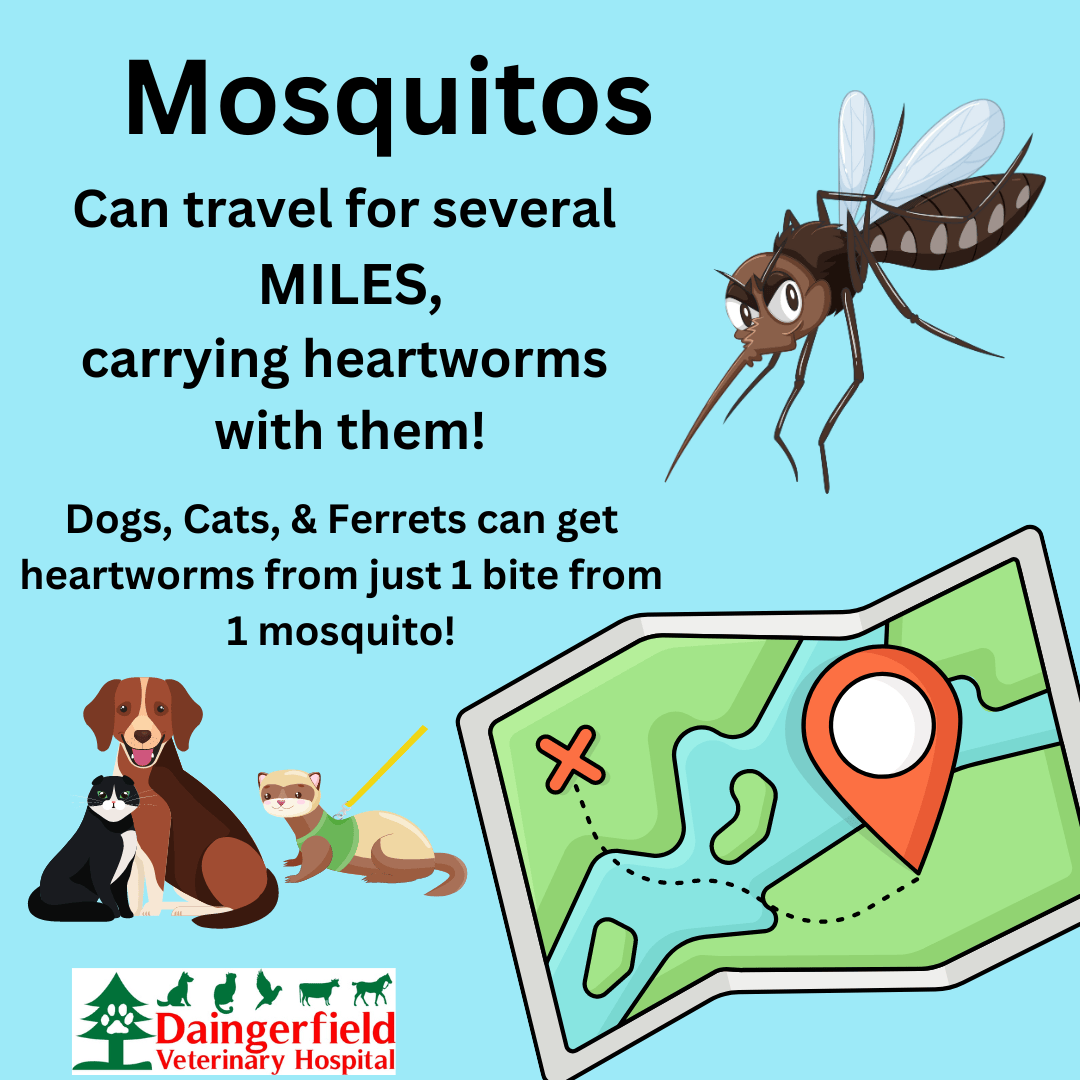
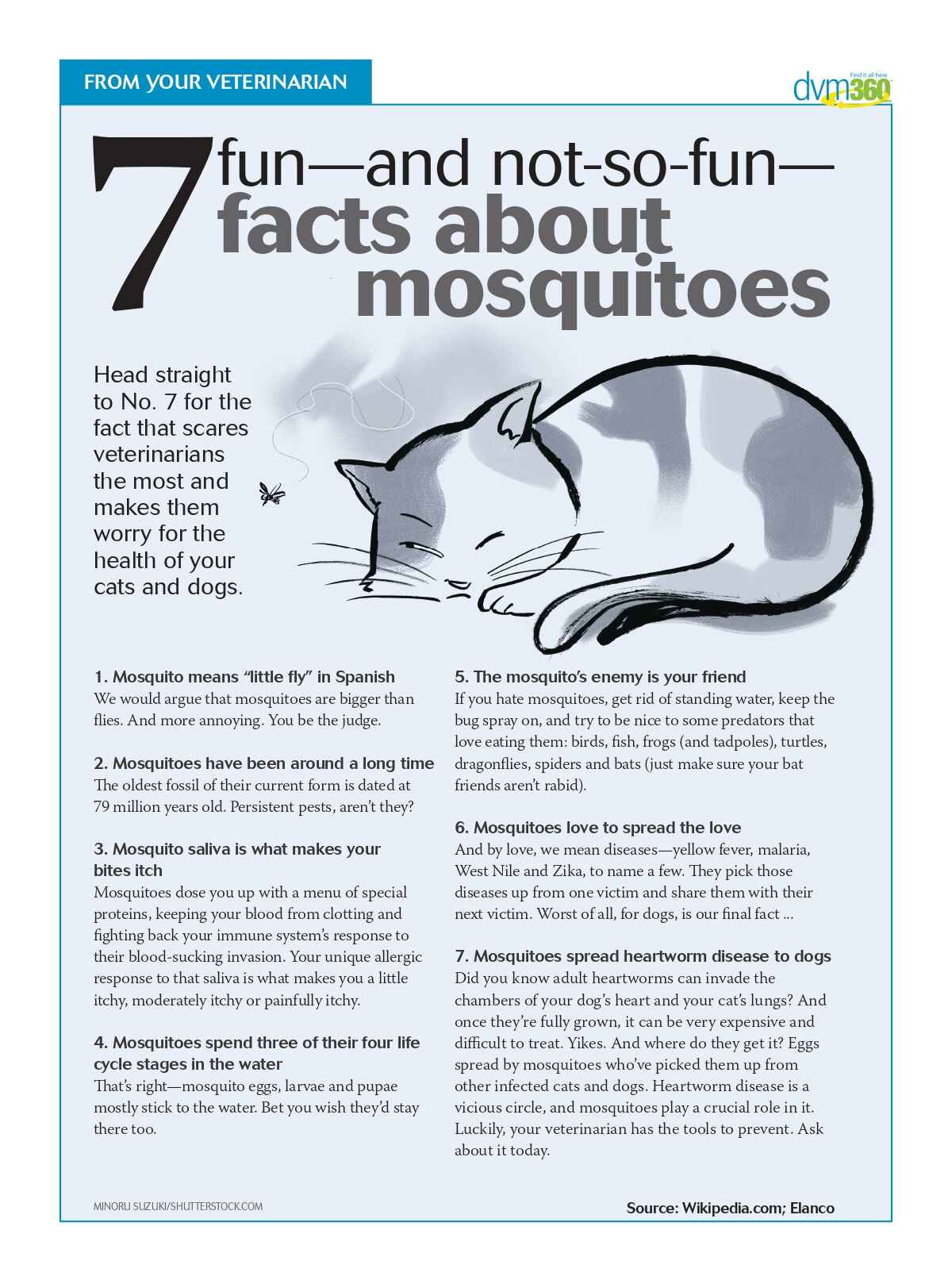
- Water & mosquitoes. We have a lot of water in the area – creeks, ponds, lakes, and puddles/standing water after it rains. Mosquitos hatch from eggs in the water, bite infected animals, then bite our pets, spreading heartworms.
- Too many pets not being on heartworm prevention medication.
Heartworm disease is real. We see it weekly, sometimes we see it every day. If the pet has not started showing outward signs of heartworm disease, we have a good chance of getting rid of the heartworms. But once a pet starts showing outward signs of heartworm disease, it can be too late to kill the heartworms.
The good news is HEARTWORM DISEASE CAN BE PREVENTED!
And if your dog does get heartworms, heartworm treatment is available for dogs!
Get on our appointment schedule! Get your dog, cat, and ferret a heartworm test every year! And give your pets the medication that prevents those teeny tiny heartworms from growing into a huge problem inside your pet!
Scroll down to learn more about heartworm disease and treatment that is available here at Daingerfield Veterinary Hospital.
MUST KNOW FACTS ABOUT HEARTWORMS IN CATS & DOGS
Lifecycle of Heartworms
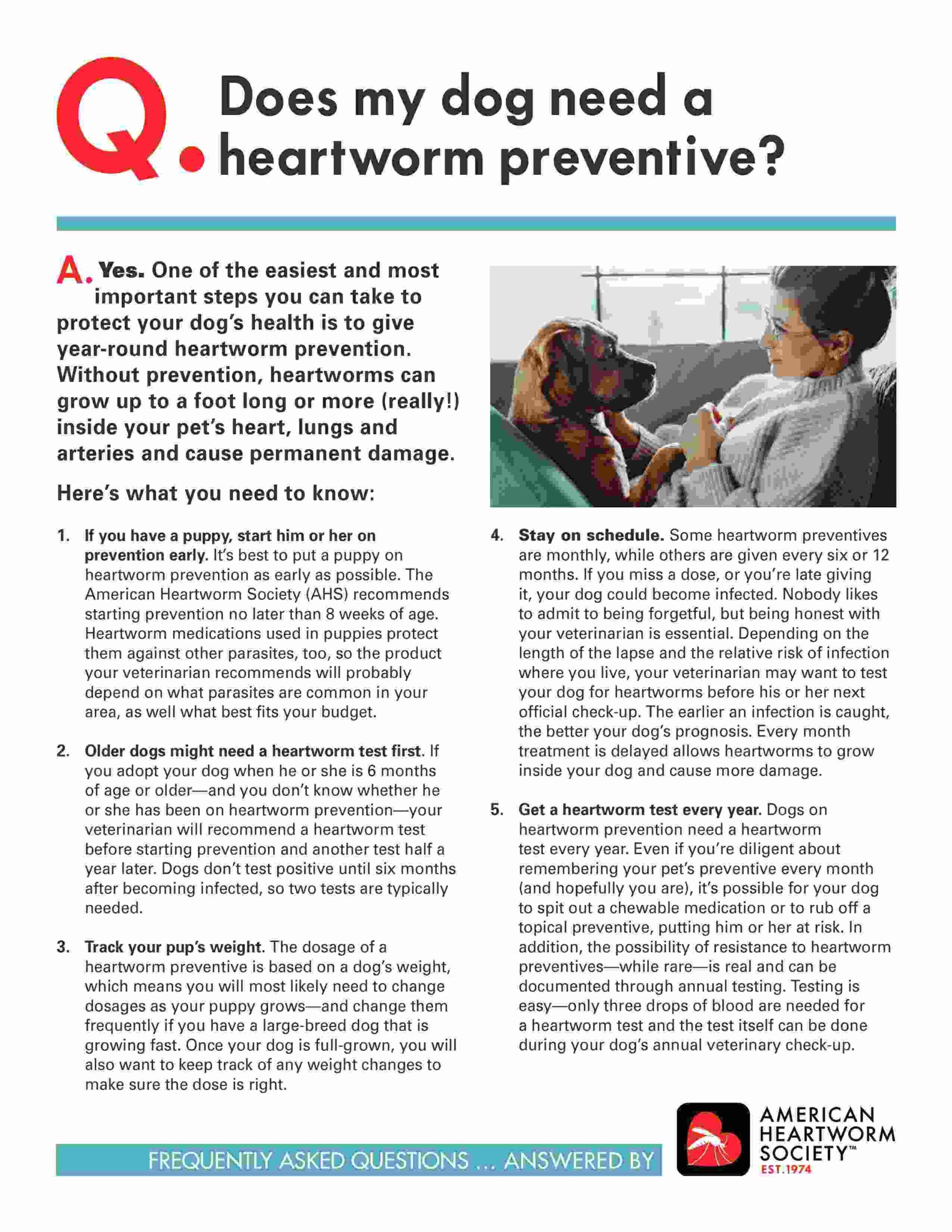
HEARTWORM PREVENTION INFO & ADOPTING A DOG WITH HEARTWORMS
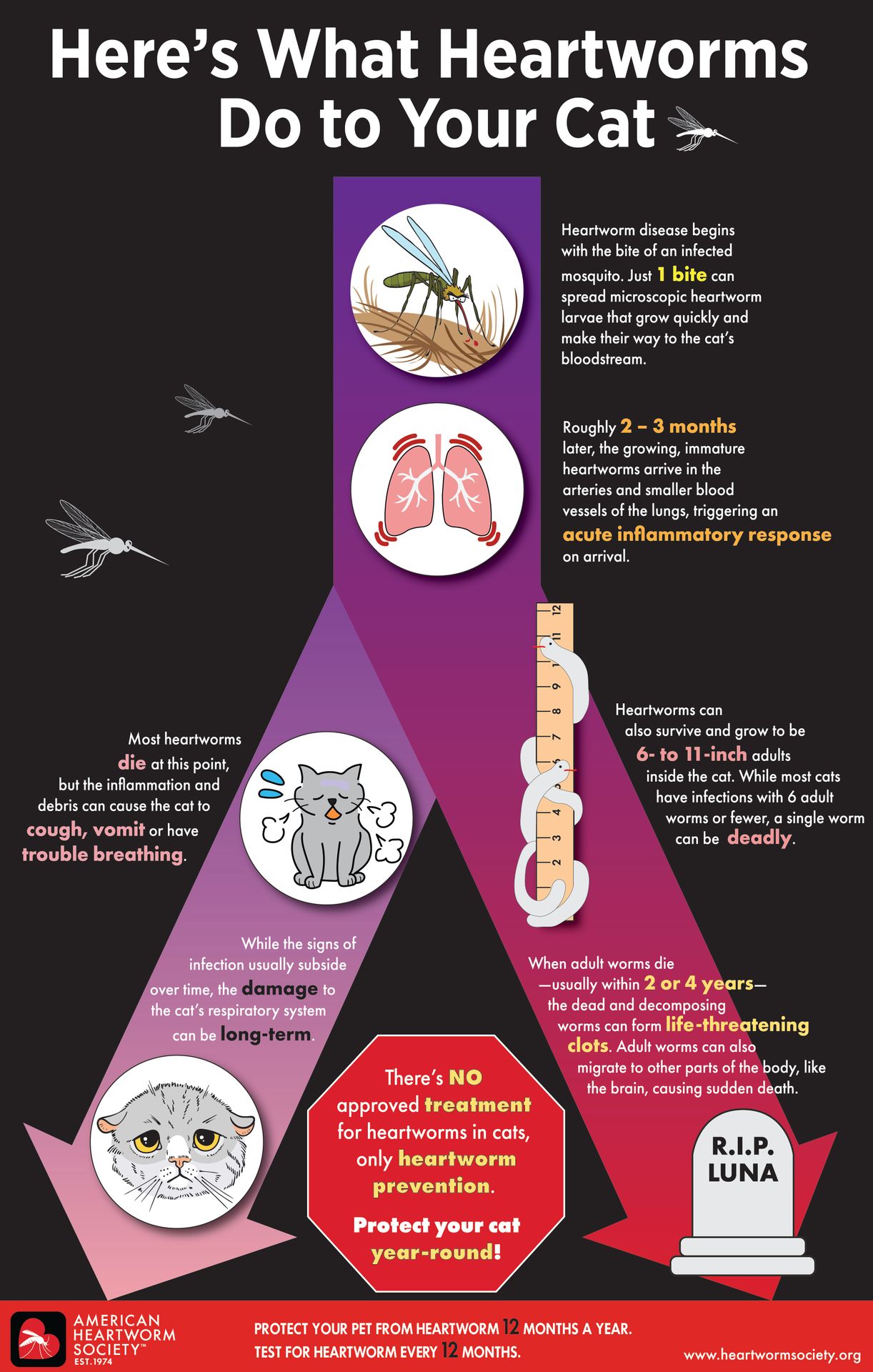
WHY HEARTWORMS ARE SCARY FOR YOUR PETS
SYMPTOMS OF HEARTWORM DISEASE
MY CAT HAS HEARTWORMS?
Preventing heartworms is the best option for cats, and ferrets. But if your cat or ferret does get heartworms, there is still care available to help support them, to keep them as healthy and comfortable as possible.
Call us or request an appointment online, so we can help you with a plan to prevent heartworms, or provide supportive care, to your cats and ferrets!
MY DOG HAS HEARTWORMS?
HEARTWORM TREATMENT FOR DOGS AT DAINGERFIELD VETERINARY HOSPITAL
MY DOG TESTED POSITIVE FOR HEARTWORMS. NOW WHAT?
Now it’s time to talk with us about the options.
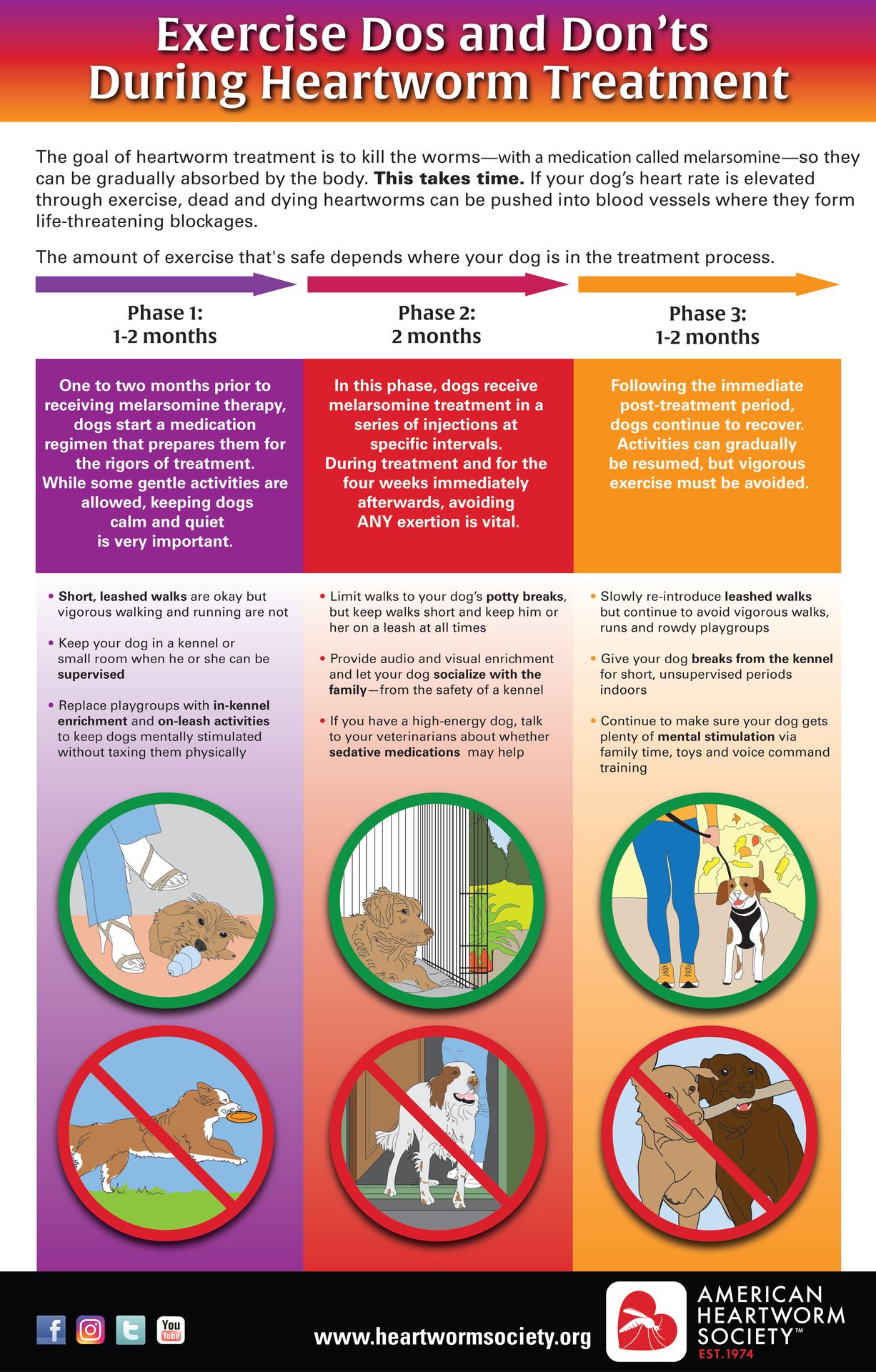
Your dog will need to be on exercise restrictions, to decrease the chance of basically having a heart attack caused by worms clogging your dog’s heart, lungs, and blood vessels.
For dogs that are in good health otherwise, we recommend the heartworm treatment regimen that is recommended by the American Heartworm Society.
This treatment has multiple parts to it, and takes about a year to complete the entire process. This treatment is the best way to get rid of the heartworms ASAP. We want to decrease the amount of worms as quickly as possible, to decrease the amount of damage they are doing to your dog’s heart, lungs, blood vessels, and other organs.
Several different medications are used in the recommended treatment:
- Heartworm “prevention” medication – to kill tiny baby worms as they appear.
- Antibiotic – to kill bacteria that is found in the heartworms. This bacteria can not only cause inflammation inside of your dog’s body, the bacteria also help the heartworms thrive and multiply inside your dog.
- Steroid – to decrease the inflammation in your dog’s body that is caused by the heartworms.
- Melarsomine – the medication that kills the adult heartworms.
There will be times that your dog will need to stay with us here at the clinic. When they are home with you, they will still need to be on their exercise restriction.
Once your dog has finished its treatment, and tested negative for heartworms, then your dog will go to the normal routine yearly heartworm testing, and stay on the heartworm prevention medication.
This treatment does NOT prevent your dog from getting heartworms again.
Your dog needs to stay on a heartworm preventative all the time, for its entire life, to help prevent getting heartworms again.
Don’t let your pet fall victim to heartworms.
- Have your dogs, cats, and ferrets tested every year for heartworms.
- Give them medicine that prevents heartworms.
- If they do get heartworms, talk to us about treatment and care.
Call us, or request an appointment online,to get your pet in to see us, so we can determine a plan to prevent heartworms in your pet, or provide treatment if your pet already has heartworms.
WHAT YOUR DOG NEEDS TO DO, TO REST DURING HEARTWORM TREATMENT
When your dog has heartworms, lots of rest, avoiding vigorous activity, is essential to their safety and recovery.
Heartworms damage your dog’s heart, lungs, and blood vessels. They can easily obstruct blood flow, basically causing your dog to have a heart attack. This becomes an even greater issue during heartworm treatment, as the treatment starts killing off the heartworms in larger numbers all at once. The dead heartworms can clump together and clog your dog’s circulatory system if your dog gets active and gets their heart racing faster.
The basics of the rest your pet needs during heartworm treatment:
- Crate/kennel rest is best
- On the leash is best for potty breaks
- Avoid running and jumping
- Provide mental stimulation to help with boredom
Check out the videos and the tips on Surviving Cage Rest, to help you plan how to keep your dog’s mind occupied, while keeping your dog’s body resting as much as possible.
OTHER HEARTWORM TREATMENTS?
ISN’T THERE SOME OTHER TREATMENT THAT IS EASIER AND CHEAPER?
You may have heard about a method called “Slow Kill” or “Soft Kill”. It’s a method that is often chosen by animal shelters & rescue groups to use for dogs in their care, because it is cheaper, and easier logistically, than the treatment that involves using the medication Melarsomine. The “Slow Kill” method is NOT a treatment to kill adult heartworms.
This “Slow Kill” method is NOT recommended by the American Heartworm Society.
The “Slow Kill” method does not kill the adult heartworms in your dog’s body.
In the “Slow Kill” method, dogs are given heartworm prevention medication, which only kills teeny tiny baby heartworms, while waiting for the adult heartworms to eventually die off.
In the meantime, the adult heartworms are continuing to damage your dog’s heart, lungs, blood vessels, and other organs. Heartworms live for 5 to 7 years before they finally die of old age. That is a lot of time to wait for the adult heartworms to die, while they continue to harm your pet.
The Melarsomine treatment, recommended by the Heartworm Society, is the fastest way to kill the adult heartworms. This treatment limits the amount of time the adult heartworms are alive and doing damage to your dog’s heart, lungs, blood vessels, and other organs.
Not every dog is a candidate for the Melarsomine treatment, but most are, when heartworms are caught early enough. If your dog tests heartworm positive, we’ll discuss options with you and come up with the care plan that suits you and your dog.
WHAT HAPPENS IF MY PET DOESN'T GET HEARTWORM TREATMENT?
For pets that test positive for heartworms, but do not receive the heartworm treatment, care is focused on monitoring the pet, managing symptoms, trying to prevent other diseases/illnesses from happening, and providing comfort care.
Sometimes pets don’t show symptoms of heartworm disease for a long time, for other pets it doesn’t take long at all before symptoms start to be seen. And sometimes pets never show any symptoms, they just die, often suddenly and unexpectedly.
If your pet has heartworm disease that is not treated with the medication that kills the adult heartworms, it is vital that your pet receives regular, routine vet care, to help prevent other problems from complicating things. Ensuring they are up to date on vaccinations, and they are monitored for progression of heartworm disease is important. This gives your heartworm positive pet the best chance of living longer, and more comfortably, if the heartworm treatment is not an option for them.
We may recommend that your pet be on heartworm prevention medication. Heartworm prevention medicine won’t kill the older/adult heartworms that are in your pet. Those adult heartworms will still be in your pet. But the medication will help to kill the tiny baby heartworms, so that your pet isn’t getting more and more adult heartworms inside of them.
It is a risk giving your pet a heartworm preventative when they already have heartworms, so be sure to discuss things with us, so we can help come up with a care plan appropriate for your pet.
We may recommend periodic xrays, or ultrasound/echocardiograms exams, to check the progression of damage done to your pet’s body by the heartworms.
If your pet shows outward signs of heartworm disease, we may prescribe medication to help decrease the symptoms they are having. These medications may include things like steroids, or the medicines used to help treat heart failure.
In end-stage cases, where fluid is accumulating inside your pet, usually in their abdomen, we may be able to remove the fluid from your pet, using a needle. This is a temporary, palliative measure, that can make your pet more comfortable, so they can breathe easier.
Every case is different. If the Melarsomine heartworm treatment is not in your pet’s care plan, we will work with you to help keep your pet as healthy and comfortable as possible otherwise.


Heartworms are scary, but we can help make it better for you and your pet. Heartworms can be prevented! In dogs, heartworms can be treated!
And there is care available to help make your pet more comfortable, if they aren’t able to have the heartworm treatment!
Call us, or request an appointment online, to make a plan for your pet’s heartworm care needs!